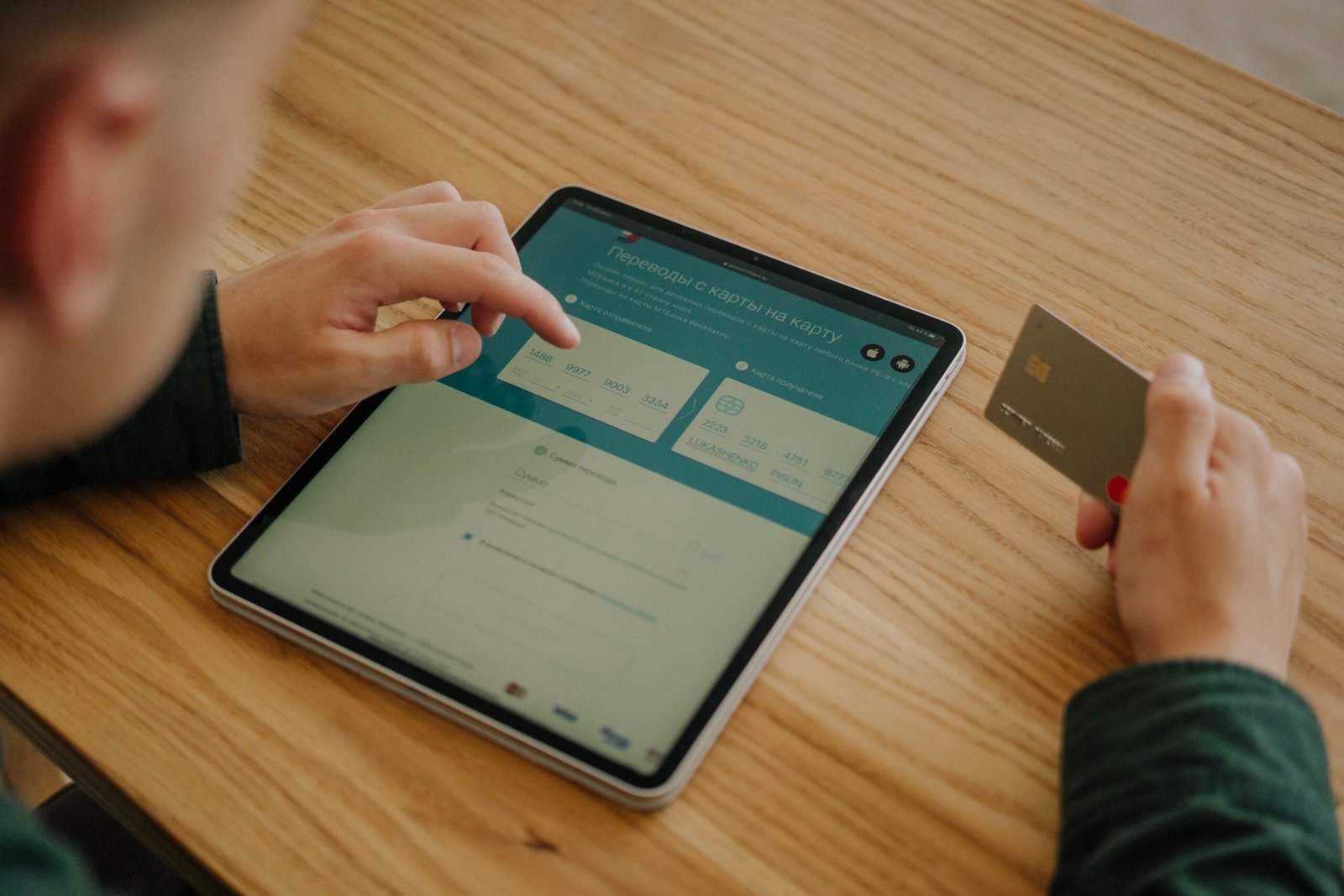
How to Choose the Best Online Banking App in 2026
Meta Title: How to Choose the Best Online Banking App in 2026
Meta Description: Learn how to choose the best online banking app in 2026. Compare fees, security, APY, ATM access, budgeting tools, mobile features, customer support and more.
Suggested URL: /how-to-choose-best-online-banking-app-2026/
Primary Keyword: best online banking app
Secondary Keywords: best online banking apps 2026, online banking app, best mobile banking app, online bank account, best digital banking app, mobile banking, online banking features, secure banking apps, best banking app for savings
How to Choose the Best Online Banking App in 2026
Banking has changed dramatically over the past decade.
You no longer need to visit a branch to check your balance, transfer money, deposit a check or pay a bill. With a modern online banking app, many routine financial tasks can be completed directly from a smartphone.
But having more choices doesn’t necessarily make choosing a bank easier.
There are traditional banks with powerful mobile apps, online-only banks with competitive rates, credit unions with digital services and fintech companies that provide banking-style experiences through apps.
So, how do you choose the best online banking app in 2026?
The answer depends on more than an attractive app design.
You should evaluate:
- Account fees
- Savings APY
- ATM access
- Deposit insurance
- Mobile check deposit
- Security features
- Customer support
- Budgeting tools
- Automatic savings
- Bill pay
- Transfers
- Direct deposit
- Overdraft policies
- Cash deposit options
- International features
- Account accessibility
The best banking app is ultimately the one that combines security, affordability, convenience and useful features for the way you actually manage your money.
Quick Answer: What Is the Best Online Banking App?
There isn’t one online banking app that is best for everyone.
A person who wants a high savings rate may prioritize APY. Someone who regularly withdraws cash may care more about ATM availability. A frequent traveler may prioritize international transactions and foreign ATM access. A beginner may want an easy-to-use app with strong customer support.
For example, current 2026 banking comparisons highlight different strengths among institutions. Capital One 360 Checking is recognized for combining digital banking with physical locations, while Ally is highlighted for online checking, broad ATM access and low fees.
Therefore, instead of asking:
“Which banking app is the best?”
ask:
“Which banking app is best for my financial needs?”
That small change can make your comparison much more useful.
What Is an Online Banking App?
An online banking app is a mobile application that allows customers to manage bank accounts using a smartphone or tablet.
Depending on the bank, an app may allow you to:
- Check balances
- Review transactions
- Transfer money
- Deposit checks
- Pay bills
- Send money
- Freeze or replace cards
- Manage direct deposits
- Set savings goals
- Monitor spending
- Receive account alerts
- Apply for financial products
- Contact customer service
Modern mobile banking has moved far beyond simply displaying an account balance.
Banking apps increasingly incorporate financial-management tools, automated savings, fraud monitoring, biometric authentication and AI-powered financial insights.
Why Choosing the Right Banking App Matters
Your banking app can become the main interface between you and your finances.
If the app is unreliable, difficult to navigate or expensive to use, everyday money management can become frustrating.
A good app should make basic tasks easier.
For example, you should be able to quickly:
- Check how much money you have.
- See recent transactions.
- Transfer money.
- Deposit checks.
- Pay bills.
- Locate an ATM.
- Lock a misplaced debit card.
- Receive fraud alerts.
- Contact support.
The app is only part of the equation, however.
You also need to evaluate the underlying bank or financial institution.
10 Things to Look for in the Best Online Banking App
1. Deposit Insurance
Security should come before convenience.
If you’re considering a U.S. online bank, determine whether deposits are protected by FDIC insurance.
FDIC insurance generally protects eligible deposits up to $250,000 per depositor, per insured bank, for each ownership category.
Credit unions generally have comparable federal deposit protection through the NCUA.
This distinction is especially important with fintech apps.
A fintech company may provide the app and customer experience while an underlying partner bank actually holds deposits. The CFPB warns that money stored in payment apps isn’t automatically protected by FDIC or NCUA insurance.
What to Check
Before depositing significant money, determine:
- Who actually holds your money?
- Is the institution FDIC-insured?
- If it’s a credit union, is it NCUA-insured?
- What deposit categories apply?
- Does the insurance apply directly or through a partner bank?
Don’t assume that an attractive financial app automatically provides the same protections as an insured bank account.
2. Monthly Fees
Fees can quietly reduce the value of an account.
Look for:
- Monthly maintenance fees
- Minimum balance requirements
- Overdraft fees
- ATM fees
- Foreign transaction fees
- Wire-transfer fees
- Excess transaction fees
- Paper statement fees
- Replacement card fees
A bank offering a slightly higher APY may not actually be the better choice if you regularly pay account fees.
Example
Suppose Bank A earns you an extra $80 in annual interest but charges $10 per month in fees.
Annual fees:
$10 × 12 = $120
Your extra interest doesn’t cover the fees.
That’s why you should compare net value, not just APY.
3. APY and Interest Rates
If you’re choosing an online banking app that includes savings, the annual percentage yield can be extremely important.
Online banks often compete aggressively on savings rates.
As of September 2026, current market comparisons show high-yield savings accounts offering rates substantially above the national average, although rates vary by institution, balance requirements and promotional conditions.
Example
Suppose you maintain:
$20,000
At 0.50% APY:
Approximately:
$100 per year
At 4.00% APY:
Approximately:
$800 per year
The difference is:
$700
Actual interest depends on compounding, balance changes and the account’s APY.
Don’t Choose an Account Based on APY Alone
Check whether the advertised rate requires:
- Minimum deposits
- Direct deposit
- Certain monthly transactions
- A specific balance
- Promotional enrollment
- A particular account bundle
The highest advertised APY isn’t necessarily the best deal for your situation.
4. ATM Access
ATM access remains important even in an increasingly cashless economy.
Ask:
- How many fee-free ATMs are available?
- Does the bank reimburse out-of-network ATM fees?
- Can you withdraw cash internationally?
- Can you deposit cash?
- Does the app have an ATM locator?
Some online banks compensate for their lack of branches with large ATM networks or ATM-fee reimbursements.
For example, current 2026 comparisons note that Ally provides access to more than 75,000 no-fee ATMs and offers limited reimbursement for out-of-network ATM fees.
5. Mobile Check Deposit
Mobile check deposit allows you to deposit a physical check by photographing it through your banking app.
This is especially useful if:
- You receive occasional paper checks.
- You don’t live near a branch.
- You want to avoid traveling to a bank.
- You need convenient deposits.
Before choosing an account, check:
- Daily deposit limits
- Monthly limits
- Funds availability
- Eligible check types
- Endorsement requirements
A banking app can have an excellent interface and still be inconvenient if its deposit policies don’t fit your needs.
6. Transfers and Payments
A strong banking app should make moving money straightforward.
Look for:
- Internal transfers
- External bank transfers
- ACH transfers
- Person-to-person payments
- Bill pay
- Wire transfers
- Recurring transfers
- Scheduled payments
Also check transfer limits and processing times.
If you frequently move money between accounts, transfer speed and limits can be just as important as the app’s design.
7. Security Features
Security should be one of your highest priorities.
A modern banking app should ideally offer several layers of protection.
Look for:
Multi-Factor Authentication
This can require an additional verification step beyond a password.
Biometric Login
Examples include:
- Fingerprint authentication
- Face recognition
Transaction Alerts
Notifications can alert you when:
- A purchase occurs
- Money leaves your account
- A large transaction occurs
- Your password changes
- Your account is accessed
Card Controls
Some apps allow you to:
- Lock a card
- Unlock a card
- Report a lost card
- Request a replacement
Device Management
You should be able to review or manage devices that have access to your account where supported.
Federal financial regulators have emphasized layered authentication and stronger controls rather than relying only on a single authentication factor.
8. Budgeting and Money Management Tools
The best banking apps increasingly function as financial-management platforms.
Useful tools can include:
- Spending categorization
- Budget tracking
- Savings goals
- Cash-flow analysis
- Recurring payment detection
- Net-worth tracking
- Credit-score monitoring
- Financial insights
Some apps can automatically categorize transactions, making it easier to see where your money goes.
For example:
Housing: 30%
Food: 15%
Transportation: 10%
Entertainment: 5%
Savings: 20%
The exact percentages will vary.
These tools are useful because they turn raw transaction data into information you can act on.
9. Customer Service
Even the best banking app can have problems.
You might eventually need help with:
- A suspicious transaction
- A locked account
- A transfer problem
- A missing deposit
- A replacement card
- Account verification
- Fraud
Therefore, evaluate customer support before opening an account.
Look for:
- 24/7 phone support
- Live chat
- Secure messaging
- In-app support
- Email support
- Branch support where available
Some online banks offer 24/7 support, while others rely primarily on digital communication.
10. App Reliability and User Experience
An attractive interface isn’t enough.
A good banking app should be:
- Fast
- Stable
- Easy to navigate
- Accessible
- Regularly updated
- Compatible with your device
Pay attention to practical tasks.
Can you find your transaction history quickly?
Can you transfer money without searching through multiple menus?
Can you freeze your debit card immediately?
Can you contact support without leaving the app?
These details matter more than animations or fancy graphics.
Online Bank vs. Traditional Bank
One of the first decisions you’ll need to make is whether you want an online-only bank or a traditional bank with branches.
Online Banks
Advantages
- Often lower fees
- Potentially higher savings yields
- Strong digital tools
- Convenient remote banking
- Frequently no branch-related overhead
Disadvantages
- Limited or no branches
- Cash deposits may be inconvenient
- Some services may require digital support
Traditional Banks
Advantages
- Physical branches
- In-person support
- Easier cash deposits
- Broader range of financial products
Disadvantages
- Some accounts may have monthly fees
- Savings rates may be less competitive
- Branches may have limited hours
Hybrid Banking
A hybrid strategy can combine both.
For example:
Primary Checking
Traditional or branch-based bank.
Savings
Online bank offering a competitive APY.
Credit Card
Separate rewards-focused issuer.
This approach can provide flexibility, although managing multiple institutions requires more organization.
Neobanks vs. Online Banks
These terms are sometimes used interchangeably, but they’re not necessarily the same.
An online bank is generally a bank that operates primarily through digital channels.
A neobank or fintech banking platform may provide a banking experience without itself being a traditional bank.
This distinction matters because the company operating the app may not be the institution holding your deposits.
Before depositing money, check the legal and insurance structure.
How to Compare Online Banking Apps
Use this checklist.
| Feature | What to Check |
|---|---|
| Deposit insurance | FDIC or NCUA protection |
| Monthly fee | $0 or waiver requirements |
| Savings APY | Current rate and conditions |
| ATM access | Network size and reimbursements |
| Mobile check deposit | Limits and availability |
| Transfers | ACH, wires and limits |
| Bill pay | Included or not |
| Security | MFA, biometrics, alerts |
| Budgeting | Categories and spending tools |
| Customer service | Phone, chat and availability |
| Cash deposits | Supported locations |
| Branch access | Yes/no |
| International use | Fees and ATM access |
| App quality | Reliability and usability |
How to Choose an Online Banking App Based on Your Needs
Best for Students
Students often need:
- No monthly fees
- Low minimum balances
- Easy mobile transfers
- Debit-card controls
- Budgeting tools
- ATM access
Don’t choose an account simply because it offers a promotional bonus.
Focus on long-term costs.
Best for Families
Families may benefit from:
- Joint accounts
- Automatic transfers
- Savings goals
- Multiple account types
- Strong transaction alerts
- Bill pay
- Budgeting tools
A family may also value customer support more than a single user with a simple account.
Best for Saving Money
If your primary goal is savings, focus on:
- APY
- Fees
- Minimum balance requirements
- Transfer convenience
- Deposit insurance
Current 2026 market comparisons show why APY differences can matter significantly for larger balances.
Best for Frequent Travelers
Frequent travelers should consider:
- Foreign transaction fees
- International ATM fees
- Currency conversion
- Card controls
- Fraud monitoring
- Travel notifications
- Customer support availability
A bank that works well domestically may not be ideal internationally.
Best for Small Businesses
Personal and business banking have different requirements.
Business users may need:
- Business checking
- Invoicing
- Multiple users
- Payment processing
- ACH transfers
- Wire transfers
- Accounting integrations
- Higher transaction limits
Don’t automatically use a personal account for business activity.
Best Banking App for People Who Hate Fees
Start by looking for:
- $0 monthly fee
- No minimum balance
- No overdraft fees
- Free ATM access
- No unnecessary transfer fees
- No paper statement fees
But read the fee schedule carefully.
“Fee-free” marketing doesn’t necessarily mean every service is free.
Best Banking App for Budgeting
Look for apps that automatically organize transactions.
Useful features include:
- Spending categories
- Budget limits
- Savings goals
- Recurring transaction tracking
- Cash-flow views
- Spending notifications
You can also connect a dedicated budgeting app if the bank’s built-in tools aren’t sufficient.
Internal link opportunity: Top Budgeting Apps to Manage Your Money Better in 2026
Best Banking App for Security
Don’t judge security by marketing language alone.
Look for:
- Multi-factor authentication
- Biometric login
- Encryption
- Fraud alerts
- Card controls
- Login notifications
- Device management
- Secure messaging
Also protect your own device.
The FDIC recommends researching financial apps before downloading them and warns users not to assume an app is legitimate simply because its name resembles a familiar bank.
Download banking apps through the bank’s official website or a legitimate app store.
How Much Should You Keep in an Online Bank?
There’s no universal amount.
Your balance should depend on:
- Emergency savings
- Monthly expenses
- Income stability
- Short-term goals
- Debt
- Investment strategy
For emergency savings, many financial experts commonly suggest building several months of essential expenses, but your personal target should reflect your circumstances.
An online savings account can be useful for emergency funds because it can combine liquidity with competitive interest rates.
Online Banking Safety Tips
Use a Unique Password
Don’t reuse your banking password on other websites.
Enable Multi-Factor Authentication
If available, use it.
Turn On Alerts
Transaction alerts can help you identify suspicious activity quickly.
Keep Your Phone Updated
Install operating-system and security updates.
Avoid Banking on Public Wi-Fi
If you’re handling sensitive financial information, use a trusted network whenever possible.
Don’t Click Suspicious Banking Links
Scammers frequently use fake text messages and emails to imitate banks.
Instead of clicking a link in an unexpected message, open your banking app directly.
Verify the App
Make sure you’re downloading the official application.
Monitor Your Statements
Review transactions regularly.
Online Banking Apps and FDIC Insurance
This is one of the most misunderstood areas of digital finance.
An app isn’t automatically a bank.
A fintech company may partner with an FDIC-insured bank to provide deposit services.
Therefore, ask:
Who holds my deposits?
The CFPB specifically notes that FDIC or NCUA insurance doesn’t automatically apply to money held in every payment app.
For a U.S. banking product, verify the applicable insurance arrangement before depositing substantial funds.
How to Evaluate a Banking App’s Privacy
Security and privacy are related but different.
A secure company can still collect significant amounts of user data.
Review the provider’s:
- Privacy policy
- Data-sharing practices
- Marketing permissions
- Third-party integrations
- Data retention practices
Ask yourself:
What information does this company collect, and why?
If you connect another budgeting or financial application to your bank account, also understand what information that third party receives.
Banking App Features That Matter Less Than You Think
Some features look impressive but shouldn’t determine your decision.
For example:
- Fancy animations
- Custom themes
- Gamification
- Chatbots
- Social features
These can be useful, but they should come after:
- Deposit insurance
- Fees
- APY
- Security
- Account access
- ATM availability
- Customer support
A beautiful app with expensive fees isn’t necessarily a good bank.
How to Compare Two Banking Apps
Suppose you’re comparing Bank A and Bank B.
Bank A
- $0 monthly fee
- 3.5% savings APY
- Large ATM network
- Strong mobile app
- No branches
Bank B
- $0 monthly fee
- 4.0% savings APY
- Smaller ATM network
- Good mobile app
- Physical branches
Which is better?
It depends.
If you rarely use cash and primarily want savings growth, Bank B might be attractive.
If you frequently need ATMs, Bank A could be more convenient.
This illustrates why there isn’t one universally best banking app.
A Simple 100-Point Banking App Scorecard
You can create your own ranking system.
Security — 25 points
- MFA
- Biometrics
- Fraud alerts
- Card controls
- Account monitoring
Fees — 20 points
- Monthly fees
- ATM fees
- Overdraft fees
- Transfer fees
Banking Features — 20 points
- Transfers
- Bill pay
- Mobile deposit
- Direct deposit
Savings Value — 15 points
- APY
- Minimum balance
- Rate conditions
ATM and Cash Access — 10 points
- ATM network
- Reimbursements
- Cash deposits
Customer Support — 10 points
- Phone
- Chat
- Availability
Total:
100 points
You can adjust these weights according to your priorities.
Why APY Isn’t Everything
Suppose:
Bank A
APY: 4.25%
Bank B
APY: 4.00%
At first glance, Bank A wins.
But suppose Bank A requires a $10,000 minimum balance while Bank B doesn’t.
If you only have $2,000 to save, Bank B could actually be more useful.
Always evaluate the account based on your balance and behavior.
How Banking Apps Can Help You Save
Modern apps can automate parts of your savings strategy.
For example, you may be able to schedule:
$100 every Friday
or
$400 every payday
Automatic savings can reduce the need to remember transfers manually.
Some platforms also offer round-up features or savings goals.
But automation works best when your checking account has enough money to cover scheduled transfers and bills.
Banking Apps and Direct Deposit
If you receive a salary or regular income, check the bank’s direct-deposit requirements.
Some institutions may offer:
- Early direct deposit
- Bonus offers
- Fee waivers
- Higher APY tiers
But don’t choose an account solely because it advertises early access to funds.
Read the eligibility requirements.
What About Overdraft Protection?
Overdraft policies vary significantly.
Some institutions:
- Don’t charge overdraft fees
- Decline transactions
- Transfer money from savings
- Offer limited temporary coverage
- Provide grace periods
Understand exactly what happens when your balance isn’t enough.
A no-fee account can still be inconvenient if transactions are repeatedly declined.
Should You Use One Bank or Multiple Banks?
Using one bank is simpler.
Multiple banks can provide greater flexibility.
For example:
Bank 1
Everyday checking.
Bank 2
High-yield savings.
Bank 3
Certificate of deposit or other specialized savings.
The downside is complexity.
You’ll have multiple:
- Logins
- Statements
- Transfer schedules
- Security alerts
Choose the setup you can manage consistently.
Common Mistakes When Choosing an Online Banking App
Mistake #1: Choosing the Highest APY
Rates can change.
Mistake #2: Ignoring Fees
Small fees can add up.
Mistake #3: Assuming Every Fintech App Is a Bank
Verify the underlying institution and insurance.
Mistake #4: Ignoring ATM Access
This can become expensive if you use cash regularly.
Mistake #5: Forgetting Customer Service
Problems happen.
Mistake #6: Downloading Fake Apps
Always verify the official application.
Mistake #7: Ignoring Privacy Policies
Understand what happens to your financial data.
Mistake #8: Choosing Based on a Welcome Bonus
A bonus is temporary.
Your account relationship may last years.
Questions to Ask Before Opening an Online Bank Account
Before applying, ask:
About Fees
- Is there a monthly fee?
- Is there a minimum balance?
- Are there overdraft fees?
- Are ATM fees reimbursed?
About Savings
- What is the current APY?
- Is the rate variable?
- Are there balance requirements?
About Security
- Is MFA available?
- Are fraud alerts available?
- Can I lock my debit card?
About Access
- Can I deposit cash?
- Are there physical branches?
- How large is the ATM network?
About Transfers
- How long do ACH transfers take?
- Are there transfer limits?
- Are wires available?
About Support
- Is phone support available?
- Is support available 24/7?
- Is live chat available?
Best Online Banking App Checklist
Before choosing an account, make sure you can answer yes to the important questions:
- Is my money appropriately insured?
- Are fees reasonable?
- Is the APY competitive for my balance?
- Does the ATM network meet my needs?
- Can I deposit checks?
- Can I transfer money easily?
- Does the app offer strong security?
- Can I receive transaction alerts?
- Is customer service accessible?
- Does the app work well on my device?
- Are privacy practices acceptable?
- Does the account fit my financial goals?
If the answer is yes to most of these, you’re probably looking at a strong candidate.
Frequently Asked Questions
What is the best online banking app in 2026?
There isn’t one best app for everyone. The right choice depends on fees, APY, ATM access, security, customer support, budgeting features and how you use your account.
Are online banking apps safe?
Online banking apps can be safe when provided by reputable institutions with appropriate security controls and deposit insurance. Users should also protect their passwords, devices and authentication information.
Is money in an online bank FDIC insured?
If the underlying bank is an FDIC-insured institution, eligible deposits are generally protected within applicable limits. However, fintech apps aren’t necessarily banks themselves, so verify where your money is actually held.
What should I look for in a mobile banking app?
Look for security, low fees, reliable transfers, mobile check deposit, ATM access, useful budgeting tools, account alerts and accessible customer service.
Are online banks better than traditional banks?
Not necessarily. Online banks may offer lower fees and competitive savings rates, while traditional banks can provide branches and easier access to cash services.
What is the most important feature of an online banking app?
Security should be one of the highest priorities. After that, consider fees, account features, access and customer support.
Can I have accounts at multiple banks?
Yes. Multiple accounts can help you separate spending and savings, but make sure you can manage all accounts responsibly.
Should I choose an online bank based on its APY?
APY is important for savings, but it shouldn’t be your only consideration. Compare fees, balance requirements, ATM access, insurance and account features.
How do I know if a banking app is legitimate?
Start from the bank’s official website and follow its app-store link rather than downloading an app from an unsolicited message or unknown source. The FDIC specifically recommends researching financial apps before downloading them.
What is the difference between a banking app and a payment app?
A banking app is generally connected to a bank or credit union account. A payment app may primarily facilitate payments or hold balances and may not provide the same deposit-insurance protections. The CFPB recommends checking how funds held by payment apps are protected.
Final Verdict
Choosing the best online banking app in 2026 isn’t about finding the app with the most features.
It’s about finding the account that works best for your financial life.
Start with the fundamentals:
Security.
Deposit insurance.
Low fees.
Competitive interest rates.
Reliable access to your money.
Then consider the features that make banking easier, such as mobile check deposit, budgeting tools, automatic savings, transaction alerts and card controls.
If you’re primarily saving money, APY may deserve a larger role in your decision.
If you’re using the account for everyday spending, fees, ATM access and payment features may matter more.
If you’re a frequent traveler, international access and foreign transaction costs could be critical.
And if you’re managing a household, joint accounts, budgeting and automated transfers may be more important than a flashy interface.
The most important lesson is simple:
Don’t choose a banking app because it looks good. Choose it because its fees, security, features and account terms fit the way you manage your money.
Before opening an account, review the institution’s current pricing, disclosures, deposit-insurance information and terms. Banking products change, and an offer that looks attractive today may be different later.
Recommended Internal Links
For a finance website, connect this article to your other money-management content.
High-Priority Internal Links
Best Personal Finance Apps in 2026
Suggested anchor: best personal finance apps
Top Budgeting Apps to Manage Your Money Better in 2026
Suggested anchor: top budgeting apps
Best Credit Cards for Everyday Spending in 2026
Suggested anchor: best credit cards for everyday spending
How to Improve Your Credit Score
Suggested anchor: how to improve your credit score
Best High-Yield Savings Accounts in 2026
Suggested anchor: best high-yield savings accounts
How to Build an Emergency Fund
Suggested anchor: how to build an emergency fund
Best Money-Saving Apps
Suggested anchor: best money-saving apps
How to Create a Monthly Budget
Suggested anchor: create a monthly budget
Recommended External Links
For a YMYL finance article, prioritize authoritative sources.
Use:
- Consumer Financial Protection Bureau
- Federal Deposit Insurance Corporation
- National Credit Union Administration
- USA.gov Financial Resources
For individual banking products, link directly to the official bank’s product page and current fee/disclosure page.
Avoid filling the article with dozens of low-quality external links. A smaller number of highly relevant authoritative references is generally more useful.
SEO Optimization Plan
Primary Keyword
best online banking app
Secondary Keywords
- best online banking apps 2026
- best mobile banking app
- online banking app
- digital banking app
- best online bank
- online bank account
- best online bank account
- secure banking apps
- mobile banking apps
- online banking features
- best banking app
- online banking services
- banking app security
Long-Tail Keywords
- how to choose the best online banking app
- best online banking app for savings
- best mobile banking app in 2026
- safest online banking apps
- best online bank with no monthly fees
- best online banking app for budgeting
- best digital banking app for everyday spending
- how to choose an online bank
- online bank vs traditional bank
- are online banking apps safe
- what to look for in an online banking app
- best banking app for managing money
Suggested SEO-Friendly H2 Structure
For search optimization, the article should target several related search intents:
- What Is an Online Banking App?
- Why Choosing the Right Banking App Matters
- What to Look for in the Best Online Banking App
- How to Choose an Online Banking App
- Online Bank vs Traditional Bank
- Neobanks vs Online Banks
- How to Compare Online Banking Apps
- Online Banking Safety Tips
- Online Banking Apps and FDIC Insurance
- Frequently Asked Questions
- Final Verdict
This structure gives Google clear topical signals without excessive keyword repetition.
Suggested Featured Snippet Answer
How do you choose the best online banking app?
Choose an online banking app by comparing deposit insurance, fees, savings APY, ATM access, mobile check deposit, transfer options, security features, budgeting tools, customer support and app reliability. The best app depends on your individual needs, spending habits and financial goals.
Suggested Image SEO
Featured Image Filename
best-online-banking-app-2026.jpg
Featured Image ALT
How to choose the best online banking app in 2026
Additional Image Ideas
online-banking-app-features-2026.jpgmobile-banking-security-features.jpgonline-bank-vs-traditional-bank.jpgbest-online-banking-app-comparison.jpg
ALT Text Examples
- Best online banking app features in 2026
- Mobile banking app security features
- Online banking versus traditional banking
- How to compare online banking apps
- Online bank account comparison
Author and Trust Recommendations
Because this is a financial/YMYL article, don’t publish it as anonymous SEO content if you want to build long-term trust.
Add:
Written by: [Author Name]
Reviewed by: [Qualified Financial Reviewer]
Last Updated: September 5, 2026
Editorial Policy: [Link to your editorial policy]
Affiliate Disclosure: [If applicable]
Also clearly distinguish editorial recommendations from paid placements or affiliate relationships.
2026 Content Update Strategy
Banking information changes frequently.
Review this article whenever:
- APYs change significantly
- A bank changes fees
- ATM networks change
- Deposit-insurance arrangements change
- Major security features are added
- Banking apps receive major updates
- New fintech regulations affect the product
- A bank launches or closes an account
For current-rate claims, don’t leave old numbers in the article for years.
A strong “Last Updated” date is particularly valuable for financial content.
Conclusion for Your Finance Content Cluster
This article works well as a commercial + informational pillar page.
You can connect it with:
Personal Finance Apps → Budgeting Apps → Online Banking Apps → Credit Cards → Savings Accounts → Credit Scores
That creates a topical finance cluster rather than isolated articles.
For maximum SEO value, avoid publishing dozens of thin “best banking app” articles that repeat the same information. Instead, make each supporting article satisfy a distinct search intent and link naturally between related pages.
The goal isn’t simply to achieve an SEO plugin’s green score.
The goal is to create a page that is useful, trustworthy, current, internally connected and commercially relevant—which is much more important for long-term finance-site SEO.