Life Insurance vs. Term Insurance Explained (2026 Guide)
Meta Title: Life Insurance vs. Term Insurance Explained (2026) | Key Differences, Pros & Cons
Meta Description: Learn the differences between life insurance and term insurance in 2026. Compare coverage, costs, benefits, and discover which policy is best for your financial goals.
Life Insurance vs. Term Insurance Explained
Choosing the right insurance policy is an important financial decision that can protect your loved ones and provide long-term financial security. One of the most common questions people ask is whether they should buy life insurance or term insurance.
Although the terms are often used interchangeably, term insurance is actually a type of life insurance. The broader category of life insurance includes several policy types, while term insurance provides coverage for a specific period. Understanding how each works can help you select the policy that best matches your financial goals, family responsibilities, and budget.
This guide explains the differences between life insurance and term insurance, their advantages and disadvantages, and the factors you should consider before purchasing a policy.
What Is Life Insurance?
Life insurance is a contract between you and an insurance company. In exchange for regular premium payments, the insurer agrees to pay a death benefit to your chosen beneficiaries if you pass away while the policy is in force.
Depending on the type of policy, life insurance may also build cash value that you can access during your lifetime.
Common Types of Life Insurance
- Term Life Insurance
- Whole Life Insurance
- Universal Life Insurance
- Variable Life Insurance
- Indexed Universal Life Insurance
Each type offers different features, costs, and levels of flexibility.
What Is Term Insurance?
Term insurance, often called term life insurance, provides coverage for a fixed period, such as:
- 10 years
- 20 years
- 30 years
- Until a specified age (depending on the policy)
If the insured person dies during the policy term, the insurer pays the death benefit to the beneficiaries. If the policy expires and is not renewed or converted, coverage ends and there is typically no payout.
Because term insurance does not usually accumulate cash value, it is often one of the most affordable forms of life insurance.
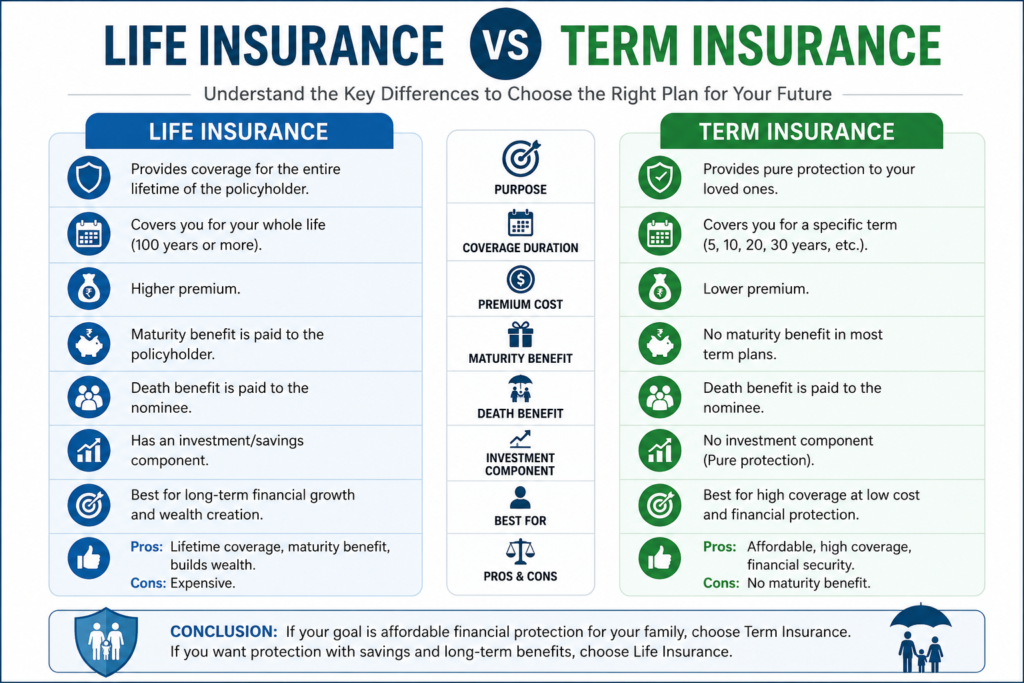
Life Insurance vs. Term Insurance: Key Differences
| Feature | Term Insurance | Permanent Life Insurance |
|---|---|---|
| Coverage Period | Fixed term | Lifetime (as long as premiums are maintained and policy conditions are met) |
| Premium Cost | Generally lower | Generally higher |
| Cash Value | Usually none | Often builds cash value |
| Death Benefit | Yes | Yes |
| Investment Component | No | Available with many permanent policies |
| Best For | Income protection | Long-term financial planning and estate goals |
Benefits of Term Insurance
Term insurance is a popular option because it offers:
- Affordable premiums
- High coverage amounts for the cost
- Straightforward policy structure
- Financial protection during key earning years
- Flexible term lengths
Best For
- Young families
- First-time insurance buyers
- Homeowners with mortgages
- Parents with dependent children
- People seeking maximum coverage at a lower cost
Benefits of Permanent Life Insurance
Permanent life insurance offers several long-term advantages:
- Lifetime coverage
- Cash value accumulation (for many policy types)
- Potential to borrow against the cash value, subject to policy terms
- Estate planning benefits
- More predictable long-term coverage
Best For
- Long-term financial planning
- Estate planning
- Individuals seeking lifelong coverage
- People interested in policies with cash value features
Which Option Costs Less?
In most cases, term insurance has significantly lower premiums than permanent life insurance because it provides coverage for a limited period and generally does not include a cash value component.
Permanent life insurance usually costs more because it is designed to remain in force for life (if policy requirements are met) and may accumulate cash value over time.
How Much Coverage Do You Need?
The amount of life insurance you need depends on factors such as:
- Household income
- Outstanding debts
- Mortgage balance
- Children’s education costs
- Future living expenses
- Existing savings and investments
- Number of dependents
Many financial professionals recommend selecting coverage that can help replace several years of income, but the right amount depends on your personal financial situation.
Factors to Consider Before Buying
Before purchasing a policy, compare:
- Premium costs
- Coverage amount
- Policy term
- Renewal options
- Conversion privileges (if available)
- Financial strength of the insurer
- Riders and optional benefits
- Claims process
- Customer service reputation
Reading the policy details carefully can help you understand exclusions, waiting periods, and any conditions that may affect coverage.
Common Insurance Riders
Many insurers allow you to customize your policy with optional riders, including:
- Accidental death benefit
- Waiver of premium
- Critical illness rider
- Disability income rider
- Child term rider
- Accelerated death benefit
Availability varies by insurer and policy.
Who Should Choose Term Insurance?
Term insurance may be appropriate if you:
- Want affordable protection
- Have young children
- Need coverage while paying off a mortgage
- Want to replace income during your working years
- Prefer a simple insurance product
Who Should Choose Permanent Life Insurance?
Permanent life insurance may be worth considering if you:
- Want lifelong coverage
- Are planning for estate transfer
- Want a policy that may build cash value
- Have long-term financial planning objectives
- Can comfortably afford higher premiums
Common Mistakes to Avoid
When buying life insurance, avoid these common mistakes:
- Buying coverage based only on price
- Underestimating the amount of insurance you need
- Waiting too long to purchase coverage
- Not reviewing beneficiary information regularly
- Ignoring policy exclusions and conditions
- Failing to compare multiple insurers
Frequently Asked Questions
Is term insurance the same as life insurance?
Not exactly. Term insurance is one type of life insurance. Permanent life insurance policies, such as whole life and universal life, provide different features, including the potential to build cash value.
Which is better: term or permanent life insurance?
Neither is universally better. Term insurance is often a good fit for people seeking affordable coverage for a specific period, while permanent life insurance may suit those who want lifelong protection and additional financial planning features.
Can I convert a term policy into permanent life insurance?
Some term policies include a conversion option that allows you to switch to a permanent policy without a new medical exam, but availability and conditions vary by insurer.
Does permanent life insurance have cash value?
Many permanent life insurance policies build cash value over time, although growth depends on the policy type and its terms.
Conclusion
Both term insurance and permanent life insurance can play an important role in a financial plan. If your primary goal is affordable income protection during your working years, term insurance is often a practical solution. If you need lifelong coverage or are interested in policies that may accumulate cash value, permanent life insurance may better align with your long-term goals.
Before making a decision, compare coverage amounts, premiums, policy features, insurer reputation, and your family’s financial needs. Choosing the right policy today can provide valuable financial security for your loved ones in the future.
Suggested Internal Links
- Best Life Insurance Companies in the USA
- How Much Life Insurance Do You Need?
- Whole Life Insurance Explained
- Universal Life Insurance Guide
- How to Compare Life Insurance Quotes
- Best Insurance Plans for Families
Suggested External Links
- HealthCare.gov (for general health coverage information)
- National Association of Insurance Commissioners (NAIC)
- LIMRA
- Consumer Financial Protection Bureau (CFPB)